The Complete Guide to Three-Stone Rings: Meaning, Styles & Symbolism
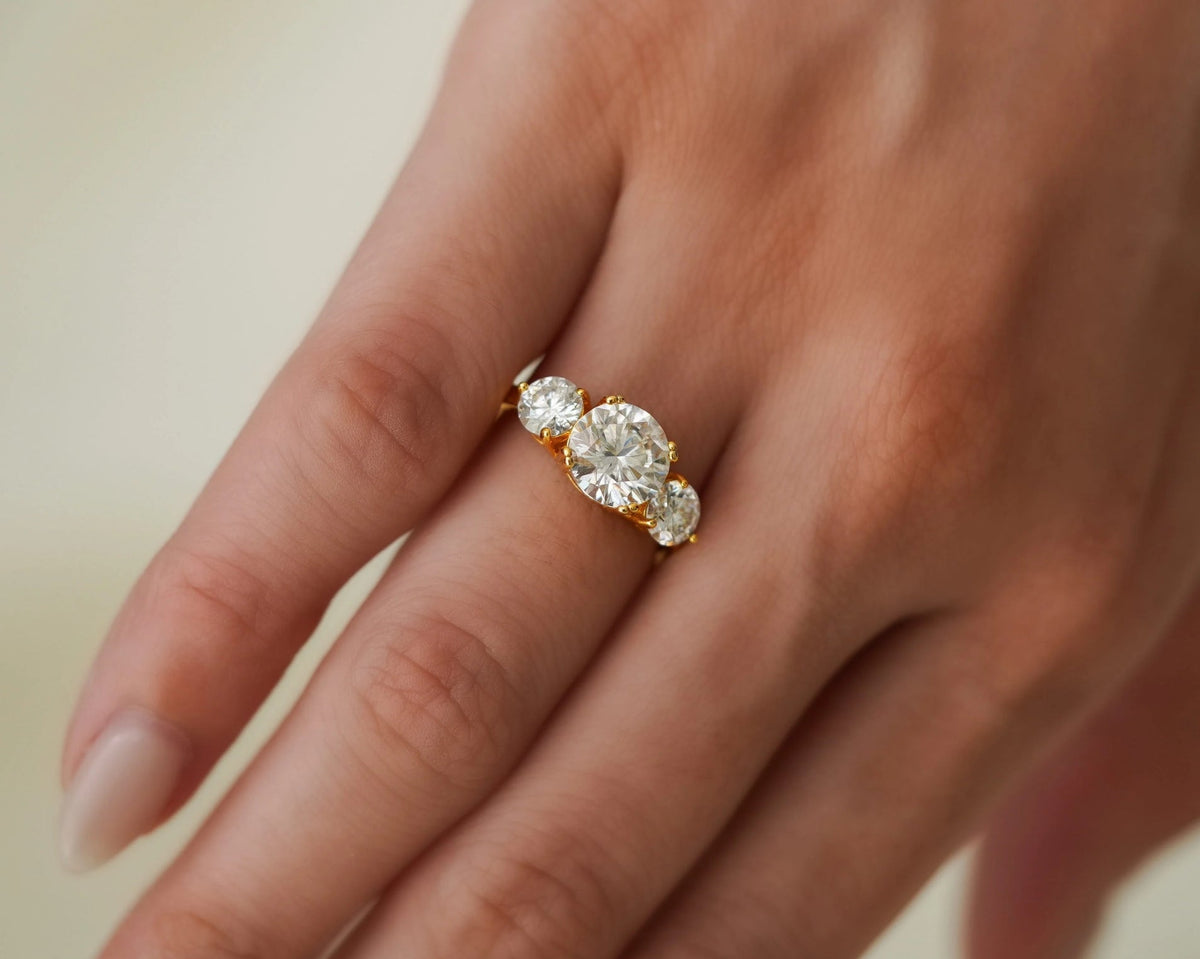
A three-stone ring features a center gemstone framed by two stones on either side, creating a design that is as rich in symbolism as it is in visual presence.
There is something satisfying about the balance of three. A center stone draws the eye first, while the two beside it complete the composition. Look a little closer, and the arrangement begins to feel less decorative and more like a story.
Traditionally, those three stones represent the past, present, and future. It is an idea that feels particularly fitting for couples choosing engagement rings in the Philippines, but the design does not belong exclusively to proposals. Three-stone rings can mark engagements, weddings, anniversaries, promises, or simply a chapter worth remembering.
Here is what the design means, how it differs from other ring styles, and what to consider when choosing the stones that will tell your version of the story.
What Is a Three-Stone Ring?
A three-stone ring is one central gemstone flanked by two side stones.
The arrangement sounds simple, but there is considerable room for interpretation. All three stones can match in shape and color for a balanced, symmetrical look. Or the center stone can be larger, differently cut, or contrasted with colored gemstones to create a more distinctive composition.
A three-stone ring, for example, might feature a larger center stone framed by two smaller pear-shaped stones. Another might pair an emerald-cut center with smaller accent stones. The stones can share similar shapes or be deliberately different to create contrast and visual interest.


What Does a Three-Stone Ring Symbolize?
Where Did the Three-Stone Ring Come From?
Three stone designs are often associated with trilogy rings, a jewelry style with historical precedents in the Victorian era. Rings of the period often used gemstones symbolically, with jewelry serving as a language for affection, remembrance, and sentiment.
Over time, the three-stone formats became associated with the “past, present, future” interpretation familiar to couples today.
Its lasting appeal is not difficult to understand. A solitaire places all its visual emphasis on one stone; a trilogy creates movement across the finger while preserving a clear center. It feels traditional without being overly formal and symbolic without requiring explanation to look beautiful.
That combination has helped the design move comfortably between generations.
Why Choose a Three-Stone Engagement Ring?

Can a Three-Stone Ring Be a Wedding Ring?
Absolutely. A three-stone ring does not have to be an engagement ring; it can work beautifully as a wedding ring or standalone symbol of marriage.
In fact, its traditional symbolism arguably becomes even more resonant on a wedding day. There’s already a shared past, a commitment being made in the present, and a future you’re choosing together.
A three-stone wedding ring can be worn on its own, which is often the simplest approach for a design with a substantial center stone. It can also be paired with an engagement ring when the profiles and proportions complement each other.
If you plan to stack the two, look at the rings from the side as well as from above. Setting height, stone placement, and band shape determine whether two rings will sit neatly together or leave a deliberate gap.
There is no requirement that a wedding ring look like a conventional band. The more useful question is whether the design works with how you want to wear it every day.
Which Three-Stone Ring Style Feels Like You?

How Do You Choose Stones for a Three-Stone Ring?
Start with the center stone. It establishes the scale, proportions, and overall character of the ring.
Choose a cut you genuinely enjoy rather than one you feel you are supposed to prefer. Round stones emphasize brilliance. Ovals create length. Emerald cuts bring crisp geometry and broad flashes of light. Pear-shaped stones and other fancy shapes can make the design feel less conventional.
Next, consider what you want the side stones to do.
If you prefer harmony, choose complementary shapes and keep the side stones noticeably smaller than the center. If you want to contrast, mixed cuts can create a more distinctive silhouette. Colored side stones can introduce symbolism or simply a color you love.
Carat weight matters, but proportions matter just as much. Three well-balanced stones can look more considered than simply maximizing size.
Lab-grown diamonds and moissanite also give couples additional options when balancing brilliance, scale, provenance, and budget. Rather than treating the gemstone as an isolated decision, consider how all three stones work together.
A three-stone ring is a composition. No single stone needs to carry the entire design.
Finding Three Stone Engagement Rings in the Philippines
A meaningful ring begins with a design that makes sense for the person wearing it.
Pristine Paradigm's made-to-order approach pairs thoughtful design with lab-grown gemstone options, giving couples exploring engagement rings in the Philippines a way to choose a three-stone ring with greater consideration for materials, proportions, and personal style.
For inspiration, designs such as the Mira Three-Stone Ring and Astra Three-Stone Promise Ring show how the same three-stone idea can take on different personalities. Astra's classic three-stone lineup feels right for a proposal, while Mira's playful mix of blue and pink stones suits a promise, anniversary, or gift that is simply meant to say this is us.
Browse Pristine Paradigm's Rings Collections and enjoy 15% discount when you purchase through our website with the code ThreeStoneRing15.
As you explore our rings collection, consider which combination of shape, stone, and setting feels closest to what you want your ring to say.
After all, the beauty of three stones is not simply that they represent a past, present, and future.
It is that the story connecting all three is yours.