What is Lab-Grown Fine Jewelry? A Complete Guide for Filipino Buyers
You're scrolling through an online jewelry shop, and something catches your eye: a diamond ring, brilliantly clear, with a price tag that doesn't require a double take. The listing says "lab-grown." You pause. Are lab-grown diamonds real? Are they worth it? What's the catch?
If that moment sounds familiar, you're not alone. The conversation around lab-grown vs mined diamonds is one of the most active conversations in the Philippine jewelry market right now. But before you decide whether it belongs in your collection or on your finger, it helps to understand exactly what you're looking at.
This guide covers everything: what lab-grown fine jewelry is, how it compares to mined stones, and whether it makes sense for you as a Filipino buyer.
What Is Lab-Grown Fine Jewelry, and Is It Real?
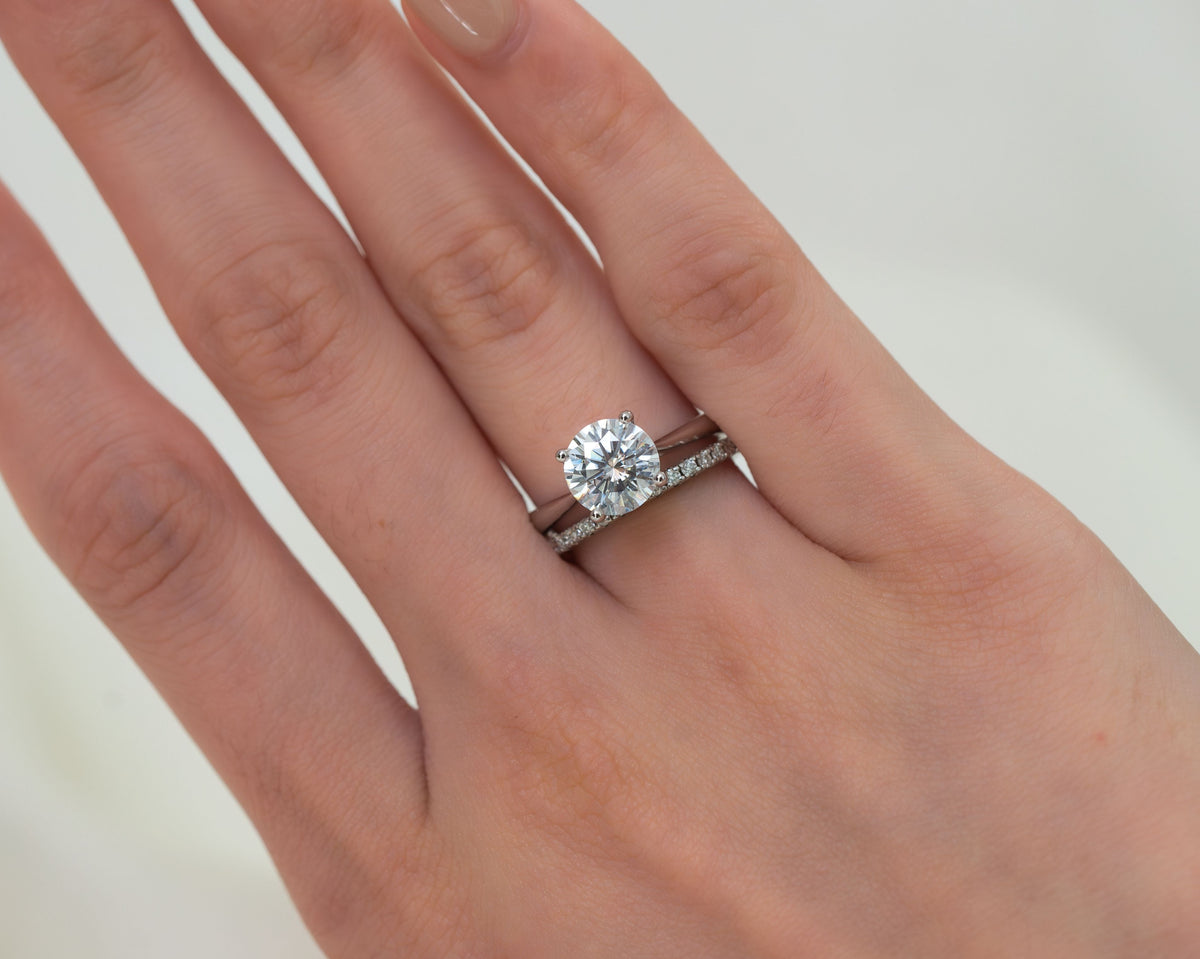
Lab-grown fine jewelry features gemstones that are created inside a controlled laboratory environment rather than extracted from the earth. That's the only difference. Everything else — the sparkle, the chemical composition, the optical behavior — is identical to what comes out of a mine.
These aren't simulants. A cubic zirconia looks like a diamond; a lab-grown diamond is a diamond. Same crystal structure, same hardness (10 on the Mohs scale), same optical properties. The Gemological Institute of America (GIA) grades lab-grown diamonds using the same 4Cs it applies to mined stones: cut, color, clarity, and carat weight.
How Are Lab-Grown Gemstones Made?
For diamonds, the two primary methods are HPHT (High Pressure High Temperature) and CVD (Chemical Vapor Deposition). HPHT replicates the intense pressure and heat of the Earth’s mantle in a controlled chamber. CVD grows diamond crystals layer by layer from carbon-rich gas — a precise, measurable process that produces the same crystal structure as a mined stone.
Other gemstones follow different paths. Lab-grown sapphires and rubies are typically produced through the Verneuil flame fusion process or hydrothermal growth. Lab-grown emeralds are often created hydrothermally, mimicking the water-and-pressure conditions found deep underground. Each method is specific to the gemstone being grown.
The result, across all of them, is a stone with the same physical and chemical properties as its mined counterpart — produced in weeks rather than over millions of years, and without the mine.
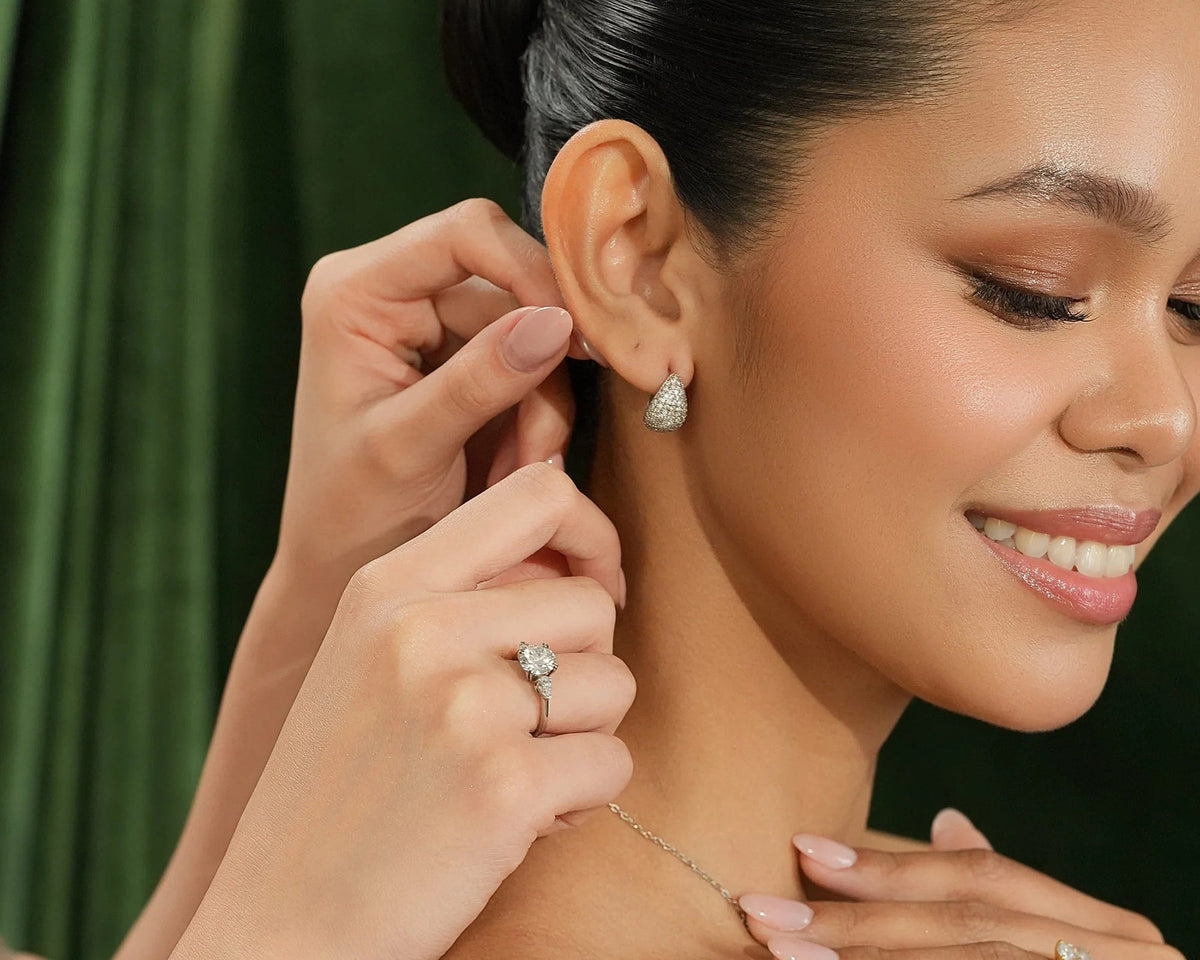
Lab-grown stones appear in the full range of fine jewelry: rings, necklaces, earrings, and bracelets. Any piece that could feature a natural gemstone can feature a lab-grown one instead.
Lab-Grown vs Mined Diamonds: What Is the Difference?
The most common question is straightforward: what is the difference between lab and mined diamonds if they look the same?
Origin. A mined gemstone spent millions of years forming beneath the Earth’s surface. A lab-grown stone reaches the same result in weeks or months. The process differs; the outcome is chemically identical.
Appearance. Side by side, lab-grown and mined stones are visually indistinguishable — not just to the naked eye, but under standard gemological magnification. Even trained gemologists require specialized equipment to tell them apart.
Price. The lab-grown diamond price in the Philippines typically runs 50 to 80 percent less than a comparable mined stone — a gap that makes a meaningful difference when choosing a center stone.
Environmental impact. Mining is resource-intensive: it displaces substantial amounts of earth, consumes significant water and energy, and carries real ecological consequences. Lab-grown production requires energy too, but the footprint is smaller, particularly as labs shift toward renewable sources.
Rarity, supply, and quality. Mined gemstones are finite. Lab-grown stones can be produced on demand, allowing for more consistent quality. A lab-grown sapphire, for instance, can be grown with fewer inclusions and a more uniform color than what a mine typically yields.
Resale value. Neither mined nor lab-grown diamonds are strong investments in the traditional sense; both typically depreciate after purchase. Mined diamonds have historically commanded higher resale prices, but those margins have narrowed. If long-term value retention is the priority, precious metals — particularly gold — tend to be a more reliable store of value than gemstones of either kind.
Is Lab-Grown Fine Jewelry Worth Buying in the Philippines?
For many Filipino buyers, the answer is yes — and not just because of the price.
More accessible pricing. The most immediate benefit is the budget. A lab-grown diamond ring that would cost ₱500,000 with a mined stone might be attainable for ₱150,000 or less. That's a meaningful shift for buyers who want quality jewelry without rearranging their finances to get it.
Comparable quality. Lab-grown stones come with the same certifications as mined ones. GIA, IGI, and other respected labs grade them rigorously. The craftsmanship in the setting, the quality of the metal, the finish of the piece: none of those changes based on where the stone originated.
Versatile for any occasion. Engagement rings, anniversary gifts, graduation pieces, everyday wear — lab-grown fine jewelry fits every context. It fits every occasion. It’s not a lesser option — it’s a different one.
Growing local availability. Reputable Philippine jewelers are increasingly carrying lab-grown options, and the category is no longer a niche curiosity. Buyers today can access a genuine selection without compromising on service or expertise.
A practical choice. Choosing lab-grown doesn't mean settling. It means making a deliberate trade-off. The savings on a center stone could go toward a better setting, a second piece, a travel fund, a vehicle down payment, or a property investment. That's a trade-off worth thinking through.
Explore Lab-Grown Fine Jewelry at Pristine Paradigm
Understanding lab-grown jewelry is one thing. Finding a source you trust is another.
At Pristine Paradigm, the collection spans lab-grown diamonds, sapphires, rubies, alexandrites, and other gemstones — all selected for quality, certified, and set with the same care given to any fine jewelry piece. The brand was built on one belief: that beauty, ethics, and transparency can all exist in the same piece.
Whether you're looking for an engagement ring, a meaningful gift, or something you'll wear every day, the team can help you find the right piece.
Visit Pristine Paradigm to explore the collection or speak directly with the team.
The Future of Fine Jewelry in the Philippines
Lab-grown fine jewelry isn't a trend on its way out. It's a category that's maturing, gaining institutional credibility, and earning the attention of buyers who are informed and deliberate about what they spend their money on.
In the Philippines, where jewelry carries deep personal and cultural meaning, lab-grown stones make it possible for more people to own pieces that mean something to them — not as a fallback, but as a first choice.
Once you understand the difference between lab-grown and mined diamonds, the question stops being whether lab-grown is real — it always was — and becomes: what do you want your jewelry to mean?
That’s the right question to start with.