How to Wear Your Engagement Ring and Wedding Band
There is a moment, usually quiet, when you look down at both rings on your finger for the first time and think: am I doing this right? Not the marriage part. The stacking part. Which ring goes where, and does it even matter?
It does — and it doesn't. The answer depends on what you value: tradition, practicality, or a little of both. For couples navigating wedding rings in the Philippines and everywhere else, there’s a clear starting point — and plenty of room to make it your own.
Which Ring Goes First? The Traditional Rule
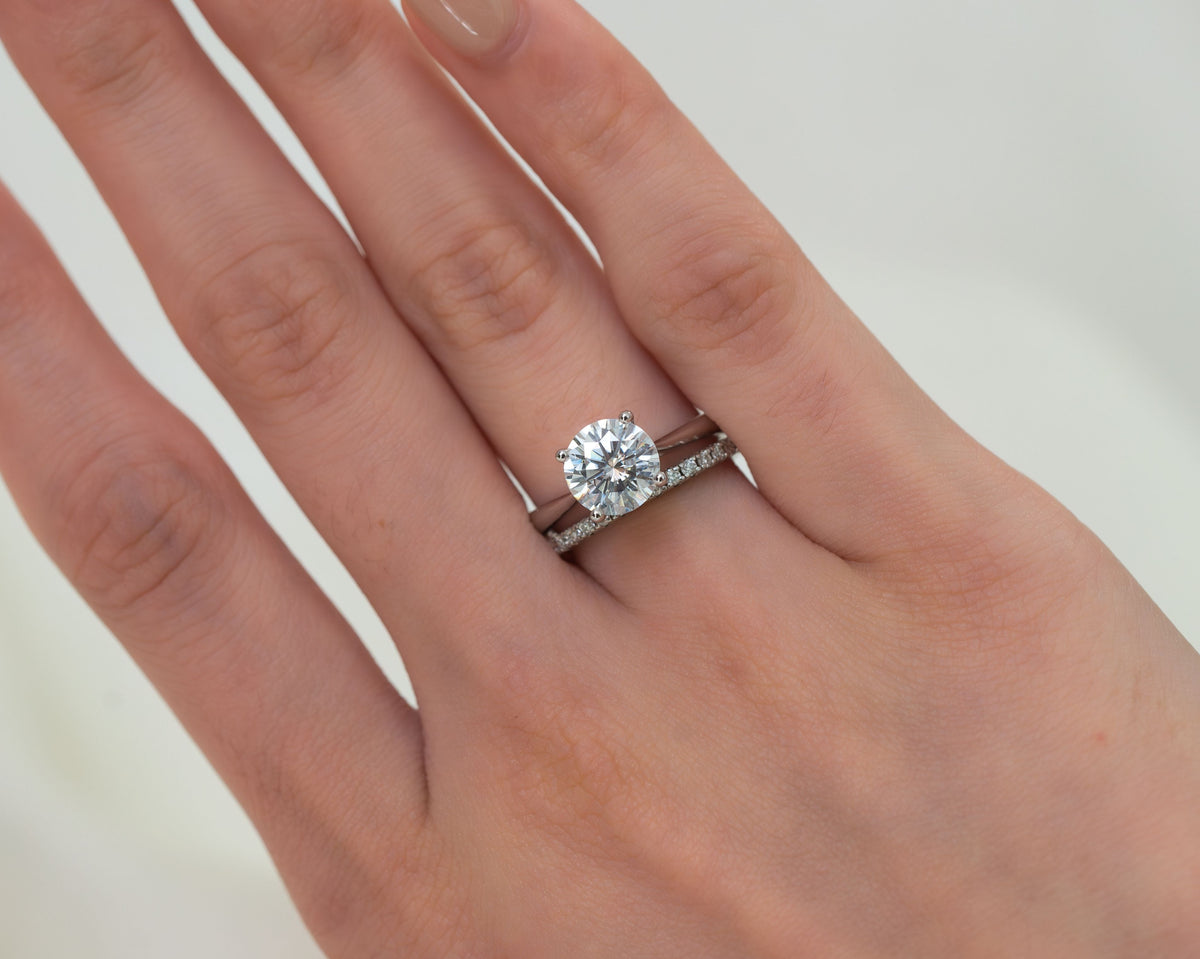
The wedding band goes on first, worn closest to the heart. The engagement ring follows, sitting above it on the same finger — the left ring finger, historically believed to be connected to the heart by the vena amoris, the "vein of love."
This tradition traces back centuries and remains the most widely practiced arrangement today. During the ceremony, the engagement ring is typically moved to the right hand, so the wedding band can be placed directly on the finger. After the vows, the engagement ring is returned to the left hand, now resting above the band.
A small ritual, but one that couples have repeated for centuries.
Why the Wedding Band Sits Closest to the Heart
Beyond symbolism, there is practical logic to this arrangement. Worn innermost, the wedding band stays more secure — anchored by the engagement ring above it. It is less likely to slide or rotate throughout the day.
The order also has a quiet logic: the wedding band, the simpler and older of the two rings, sits at the foundation. The engagement ring, often more elaborate, rests on top. Together, they build outward.
This remains the most common wedding band placement among couples today, whether they follow the tradition consciously or simply because it feels natural.
Different Ways to Wear Your Engagement Ring and Wedding Band
Tradition is a guide, not a rule. Here are the most common approaches, each with its own logic.
The Traditional Stack: Band First, Ring Second

Wedding band on the inside, engagement ring on the outside. This is the classic arrangement and works beautifully with most ring designs, particularly solitaires and rings with profiles that sit flush against a band.
Engagement Ring First
Some people find it more comfortable or more practical to wear the engagement ring innermost, especially if the band has an elevated or contoured design that naturally cups the engagement ring from below. Others simply prefer the look. There is no rule against it.
Wearing Rings on Separate Hands
Statement engagement rings, physically demanding work, or frequent travel all lead couples to wear their rings on different hands — the engagement ring on the right, the wedding band on the left, or vice versa. This is increasingly common and means exactly as much as any other arrangement.
Soldered or Fused Sets
Some couples have their rings permanently joined by a jeweler, creating a single unified piece. The benefit is simplicity: no shifting, no separating, no wondering which goes where. The trade-off is that resizing becomes more complex, and the rings cannot be worn independently.
What Affects How You Wear Your Rings?
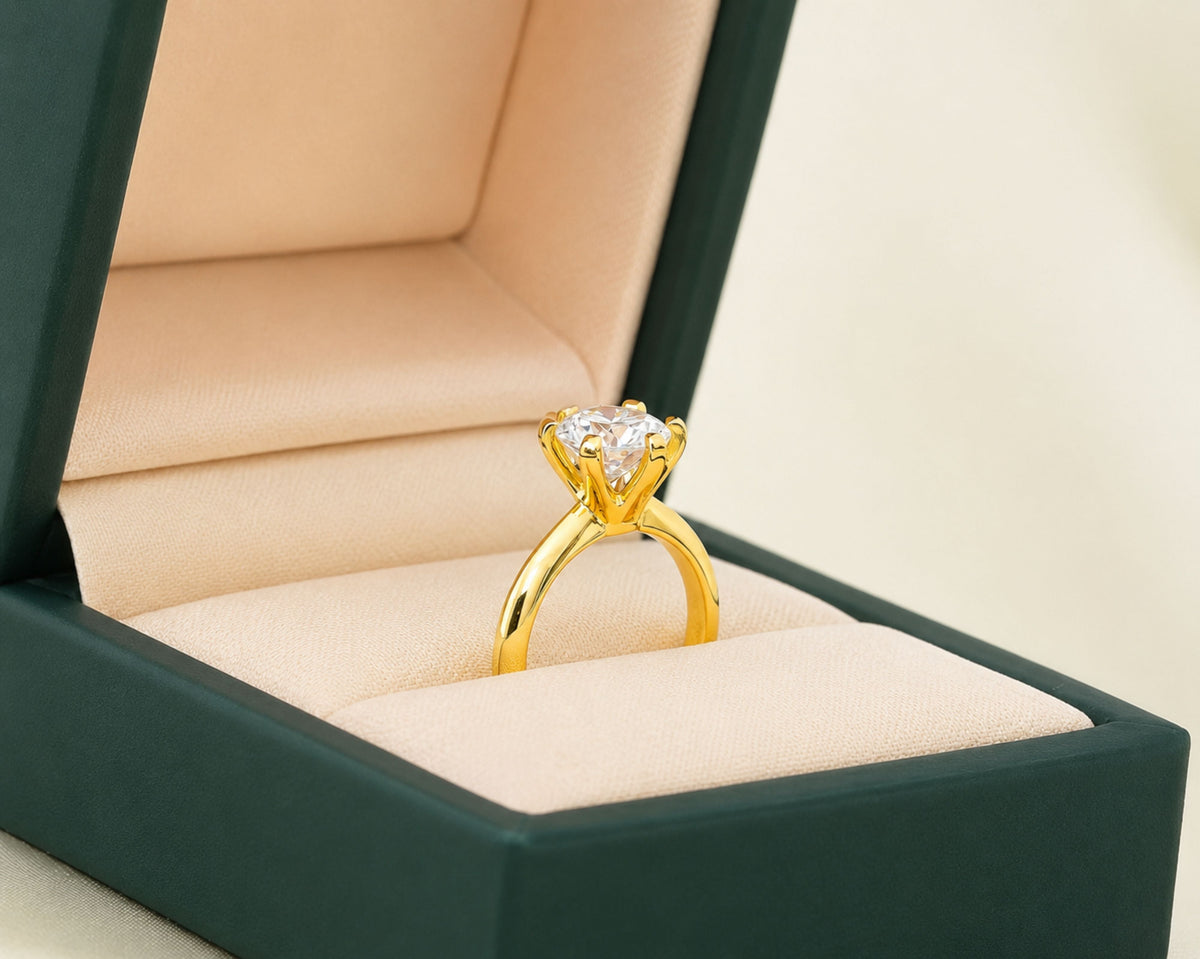
Ring design and setting matter more than most people expect. Curved or contoured wedding bands are designed specifically to follow the silhouette of an engagement ring, sitting flush against it without gaps. Straight bands may leave a slight space depending on the shape of the engagement ring's base. Setting height is worth considering too: a low setting sits close to the finger and stacks neatly with most bands; a mid-setting offers a bit more presence without making pairing difficult; a high setting, like a tall prong or cathedral mount, may create a gap between the rings or require a contoured band to sit properly alongside it.
Daily life plays a role as well. If you work with your hands, wear gloves regularly, or are frequently in environments where jewelry takes a beating, a simpler arrangement — or temporarily removing the engagement ring — may be the more sensible choice.
Fit is foundational. Two rings worn together need to be sized to sit comfortably without constricting circulation or creating friction that wears down the metal over time. If your rings feel tight together, have a jeweler assess the fit before it becomes a problem.
Do You Have to Follow Tradition?
No. Modern engagement ring placement and wedding ring customs have shifted, and what matters most is what works for the people wearing them.
Some couples choose matching bands and wear them as a set from day one. Others mix metals, alternate which ring they wear on a given day, or skip one ring entirely in favor of a single meaningful piece. Filipino couples are embracing more personalized approaches: rings that reflect individual taste, lifestyle, and the relationship itself, rather than a prescribed formula.
The tradition exists because it’s beautiful and meaningful. Departing from it doesn’t change that.
How to Choose a Wedding Band That Pairs Well with Your Engagement Ring
The most important consideration is proportion. A delicate engagement ring can be overwhelmed by a wide band; a bold solitaire can absorb a thin band without issue. When in doubt, lean toward a band that complements rather than competes.
Metal should match or intentionally contrast. Mixing yellow gold and white gold is increasingly popular and can be striking when done with intention. Mixing them accidentally, because the options weren't considered together, tends to look mismatched.
Stone settings are worth thinking about in relation to the band too. A pavé engagement ring pairs naturally with a pavé or plain band; a bezel-set ring works well with anything. Engagement and wedding ring sets designed to be worn together solve this problem entirely: the pairing has already been considered, and the fit is built in.
Engagement and Wedding Ring Trends in the Philippines
Filipino couples are increasingly drawn to coordinated ring sets, particularly those in minimalist styles with clean lines and ethical sourcing credentials. Lab-grown diamonds and gemstones have surged in popularity, offering the same optical and physical properties as mined stones with full traceability and a lower environmental footprint.
Yellow gold is making a genuine comeback, often paired with white gold or platinum settings. The preference for rings that work together — visually and physically — has made matched sets far more sought after than they were a decade ago. Couples want rings that feel intentional because the decision behind them is.
Find the Perfect Ring Set at Pristine Paradigm
At Pristine Paradigm, every engagement and wedding ring is designed with the pair in mind. The profiles work together. The metals align. The fit is built to complement, not compromise.
Browse the full collection of engagement and wedding ring sets — each one crafted so the stacking question answers itself.
Wear Them Your Way
The traditional order is clear: wedding band first, engagement ring second, both on the left ring finger. But the more honest answer is that there is no single right way to wear your rings. There is only the arrangement that fits your life, your hands, and what the rings mean to you.
Start with the tradition if you like. Then wear them however makes you happiest. The rings will follow.