Diamond Shapes Guide: Choosing Lab-Grown Diamonds in the Philippines
There's a moment, right before someone chooses a diamond, when the decision suddenly feels bigger than it did a few minutes ago. Round or oval. Pear or emerald. A silhouette that will sit on a hand or a neckline for years, maybe decades. It's a small choice with a long life.
Shape is where that choice usually begins, and for good reason. It influences how a stone catches light, how it wears in daily life, and how it reflects the person choosing it. As more buyers turn to lab-grown diamonds in the Philippines, the question isn’t only which diamond to choose anymore. It’s which shape tells the story you want it to tell.
This guide walks through the language of diamond shapes, what makes each one distinct, and how to choose with confidence, whether you're browsing Pristine Paradigm's collection or simply learning before you buy.
Diamond Shape vs. Diamond Cut: What’s the Difference?
Shape and cut are often used interchangeably, but they answer different questions. Shape describes a diamond's outline: the silhouette you'd trace if you drew around it. Round, oval, pear, emerald, and marquise are all diamond shapes.
Cut, on the other hand, refers to the facets, angles, and proportions within that outline—the details that determine how light enters, bounces, and exits the stone. Two round diamonds can share the same shape and still perform completely differently depending on how well they’re cut.
Understanding this distinction matters because it changes what you're evaluating. When someone says they love round diamonds, they're describing a silhouette. When a jeweler talks about brilliance, they're talking about cut quality within that silhouette. Both deserve attention, but they're not the same conversation.
What Are the Different Lab-Grown Diamond Shapes?

Lab-grown diamonds are available in many of the same shapes as mined diamonds. Each brings its own proportions, character, and relationship with light.
- 1. Round. The most classic diamond shape, prized for its symmetry and 58 precisely cut facets, which are designed to maximize brilliance and sparkle. A round diamond suits nearly any setting and personal style, which is part of why it remains one of the most requested shapes in fine jewelry.
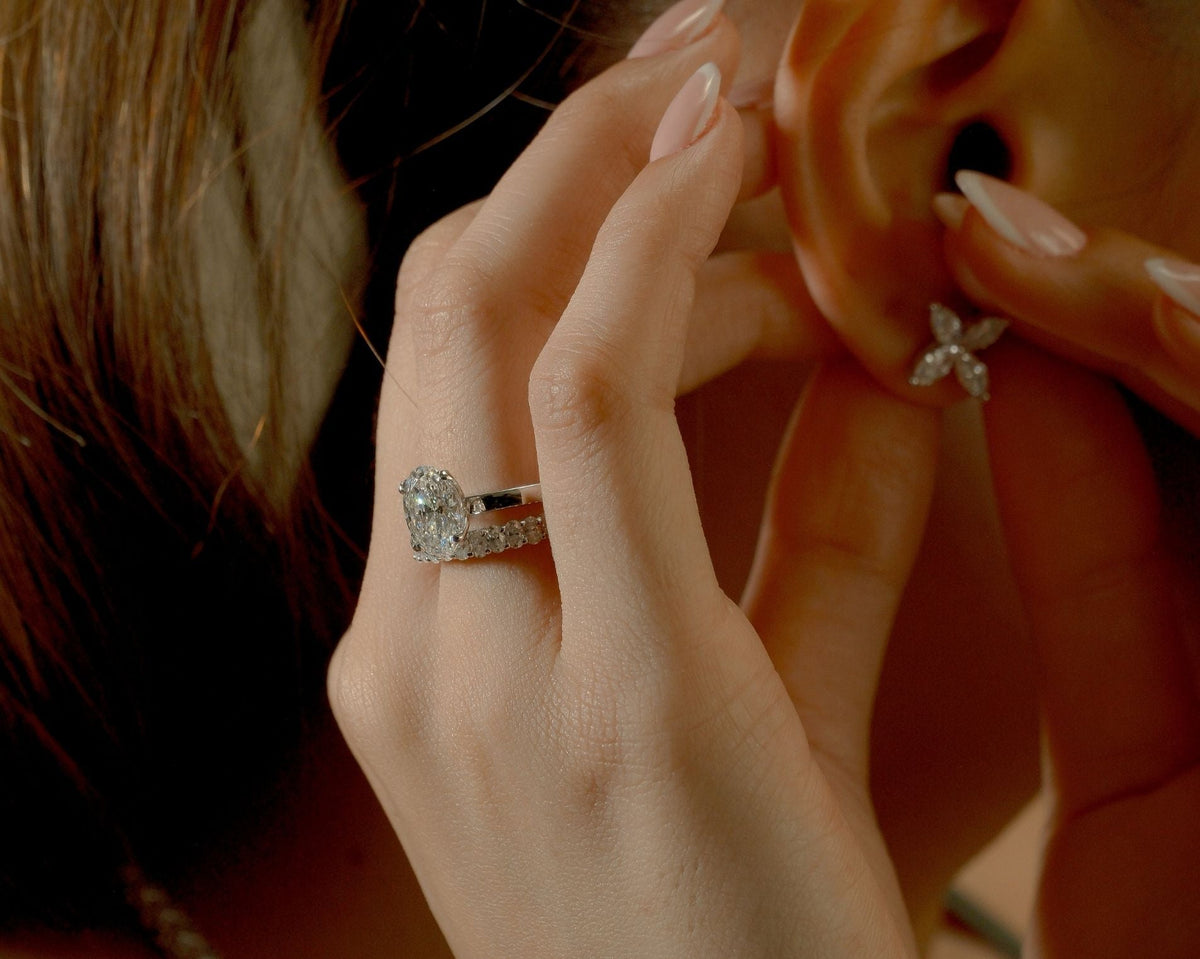
- 2. Oval. An elongated take on the round brilliant, with similar fire but a slimmer profile that can make the finger appear longer. Those who love the classic appeal of round diamonds but want something a little less expected often choose this shape.
- 3. Emerald. A rectangular shape built on step-cut facets arranged in parallel lines rather than triangles. The result is less sparkle and more emphasis on clarity: long, clean flashes of light instead of scattered brilliance. It reads as quiet and architectural.
- 4. Marquise. Elongated with two pointed ends, the marquise has a dramatic, almost regal profile. It tends to maximize apparent size and suits someone drawn to jewelry with a strong point of view.
- 5. Pear. Part round, part marquise—one end curved, the other tapered to a point. A pear-shaped diamond combines softness and definition in a silhouette that immediately stands apart from more symmetrical shapes. It is often chosen for pendants or as a ring stone worn with the point facing the fingertip. For buyers looking for a distinctive alternative to round or oval stones, a pear-shaped.
- 6. Princess. Square and geometric, with sharp corners and strong internal brilliance. It’s a modern shape favored by those who want the sparkle of a round diamond in a more architectural form.
- 7. Radiant. A hybrid with a square or rectangular silhouette and trimmed corners. It combines defined geometric lines with the brightness of a brilliant-style faceting pattern.
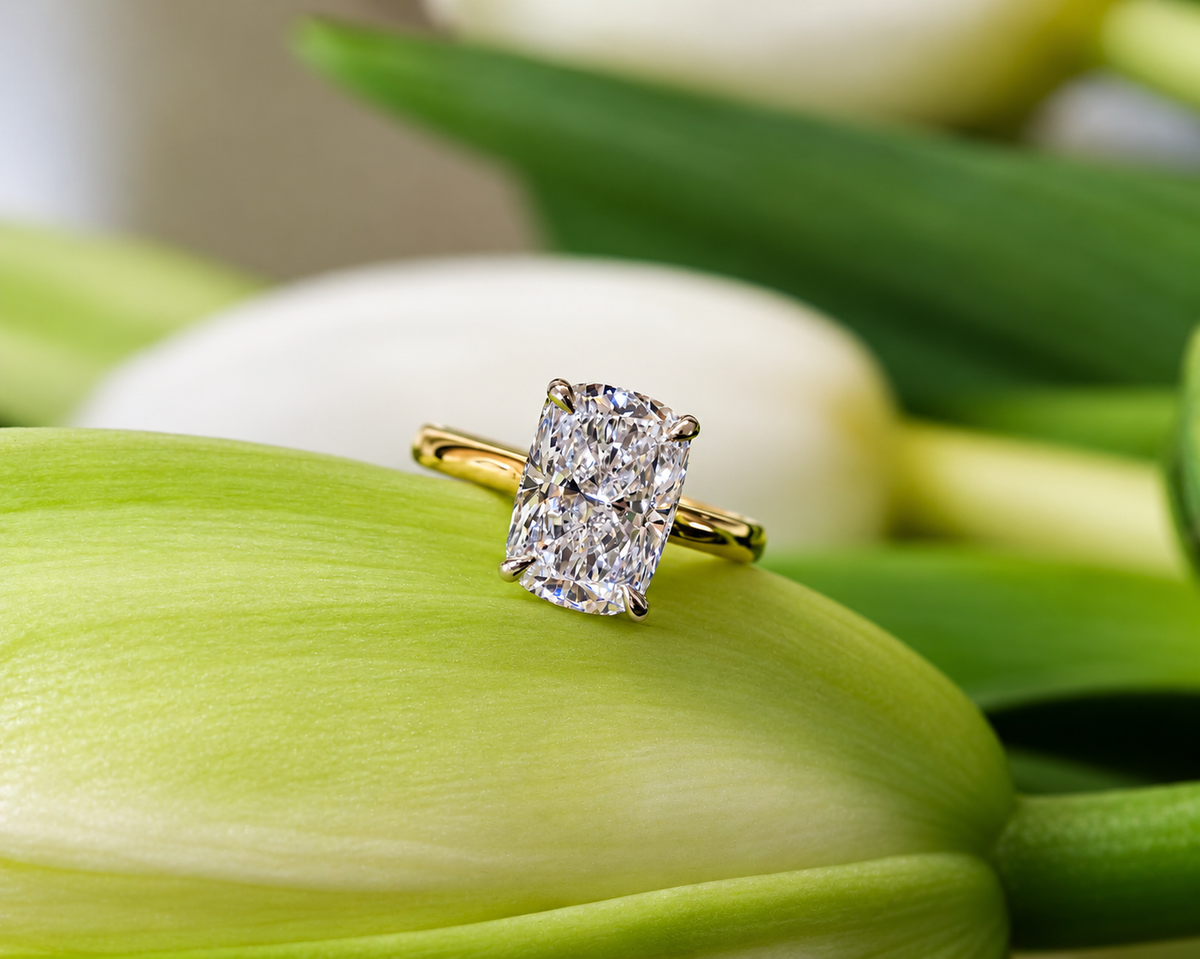
- 8. Cushion. Square or rectangular with softened, rounded corners, giving it a pillowy, romantic silhouette. It’s one of the oldest cutting styles, yet it still reads as timeless.
- 9. Heart. Instantly recognizable and unmistakably symbolic. A well-cut heart shape has defined lobes and a crisp point, making it a deliberate, sentimental choice.
How Do I Choose the Right Diamond Shape for Me?
There’s no single “best” diamond shape. The right choice is the one that suits your personal style and how you want to wear your jewelry day after day. From there, a few key factors can help you narrow down your options.
- 1. Personal style. Someone drawn to clean, minimalist lines might lean toward emerald or radiant. A romantic sensibility often gravitates toward cushion or pear, while bold, modern tastes may favor princess or marquise. There’s no wrong answer here, only the one that feels most like you.
- 2. Jewelry type and design. The shape should complement the piece it’s set in. Elongated shapes like oval and marquise often suit rings and pendants that benefit from a lengthening effect, while emerald and princess shapes bring structure to stackable or geometric designs. Pristine Paradigm’s collection is built around this idea: each diamond ring shape offering is paired with a setting designed specifically to let that silhouette do its best work.
- 3. Brilliance and appearance. Diamond shape affects how a diamond looks and sparkles. Round, princess, oval, and radiant shapes are generally faceted to emphasize brilliance, producing many small, bright flashes of light. Emerald shapes, by contrast, feature step-cut facets that produce broader, more deliberate flashes. Neither is superior; they simply create different visual effects.
- 4. Visual size and proportions. Two diamonds of equal carat weight can look noticeably different in size. Elongated shapes such as oval, pear, and marquise can appear larger face-up than round or princess-cut diamonds of the same carat weight because of how their proportions distribute the stone’s weight. Keep in mind that carat measures weight, not visible size. Two diamonds with the same carat weight can look noticeably different in size.
-
5. The 4Cs. Shape works alongside cut, color, clarity, and carat, but it isn’t one of the 4Cs itself. A beautifully chosen shape still benefits from thoughtful consideration of cut quality, clarity, color, and carat weight.
- 6. Personal preferences. Beyond the technical details, trust your eye. Compare shapes in person or side by side before deciding, since photographs rarely capture how a stone moves and interacts with light. If you’re drawn to something less conventional, unique engagement rings and other fine jewelry are often where personal taste shows most clearly.
Give Personal Preference the Final Word
What is the most popular lab-grown diamond shape? Round remains one of the most established and widely recognized choices, but popularity is not the same thing as suitability.
You may find yourself repeatedly drawn to an oval. Perhaps the clean geometry of an emerald feels more like you. Or the asymmetry of a pear makes a piece feel more personal.
Compare shapes in the context of the jewelry you want to wear. The right choice often becomes clearer when you stop asking which diamond is supposed to be best and start noticing which one you keep looking at.
Discover Lab-Grown Diamonds in the Philippines with Pristine Paradigm
There is no universal diamond shape. The right choice depends on your style, the jewelry design, the proportions you prefer, and the way you want the stone to interact with light.
For those considering lab-grown diamonds in the Philippines, shape is an opportunity to make the decision more personal. Round offers familiar brilliance. Emeralds bring clean geometry. Oval and marquise create graceful length. Pear introduces asymmetry, while cushion and heart bring their own softer forms of expression.
Pristine Paradigm approaches lab-grown diamond jewelry with a strong focus on ethical sourcing, transparency, and craftsmanship.
With customization and personalized assistance available, each stone and setting can be thoughtfully considered to create a cohesive design.
Explore Pristine Paradigm’s lab-grown diamond jewelry to find a shape and design that suits your style. The details matter, but the piece should ultimately feel like yours.